Storage for Wholesalers and Retailers: A 2026 Saudi Inventory Playbook
Storage for Wholesalers and Retailers has become the quiet backbone of Saudi commerce in 2026. As e-commerce orders surge and supply chains stretch across Riyadh, Jeddah, and Dammam, traders who master their inventory space win on speed, cost, and customer trust. This guide breaks down how modern warehousing lifts margins and keeps shelves full year-round.
Whether you move fast-turning consumer goods or seasonal stock, the right facility turns a cost center into a growth engine. Let us walk through the practical choices that matter most.
Why Dedicated Storage Beats Ad-Hoc Space
Many small traders start by cramming stock into back rooms, garages, or a cousin’s spare villa. That works until it does not. Damaged goods, lost pallets, and frantic stock counts eat into profit fast.
Purpose-built warehousing solves three problems at once. First, it protects goods from heat, dust, and pests. Second, it gives you a real address for deliveries and returns. Third, it lets you scale space up or down as demand shifts, so you never pay for empty square meters.
- Security: CCTV, access control, and insured facilities reduce shrinkage.
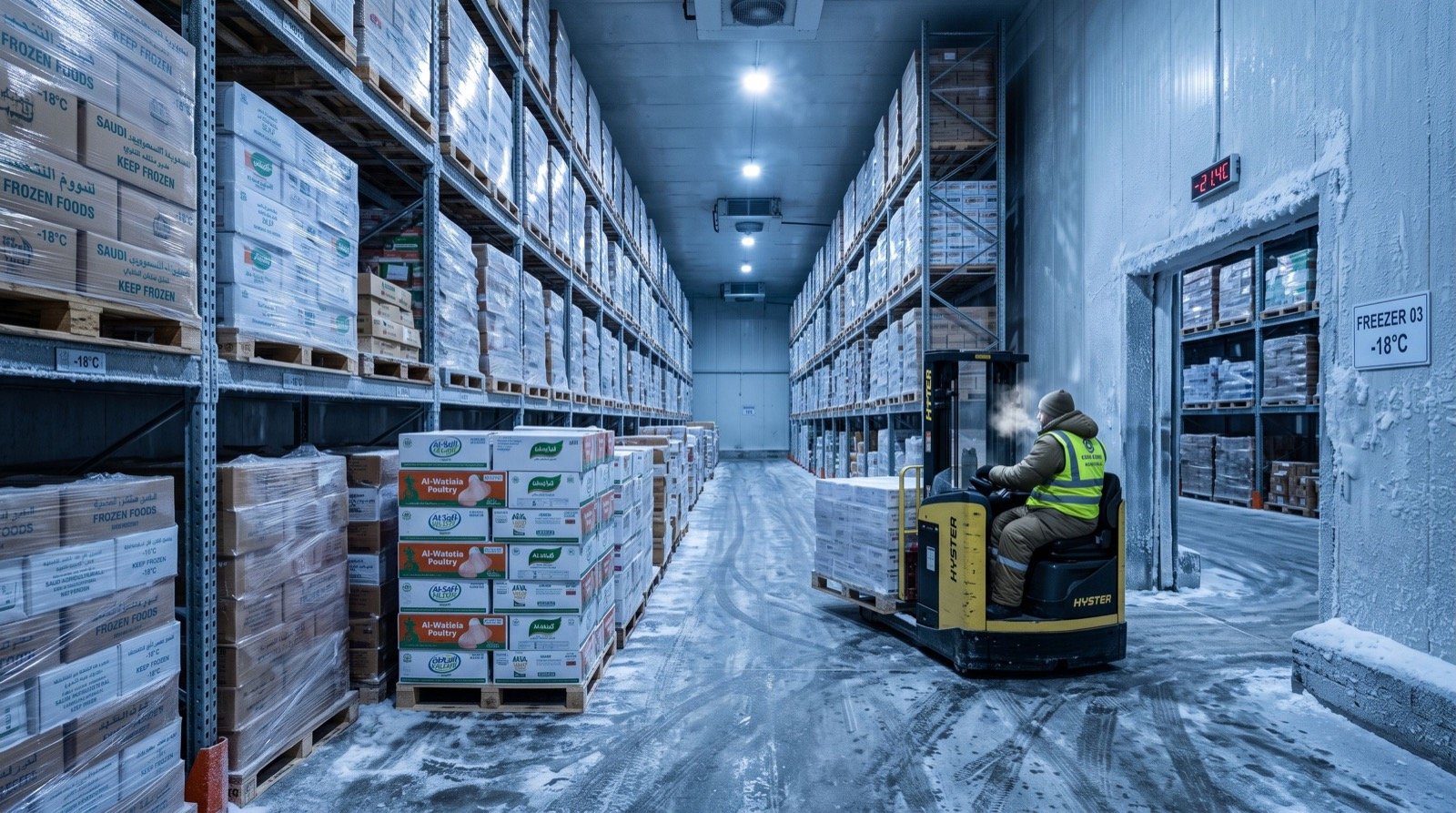
- Climate control: Stable temperature guards sensitive products in the Gulf summer.
- Flexibility: Short leases suit seasonal retail peaks like Ramadan and back-to-school.
Teams that partner with Storage for Wholesalers and Retailers gain this structure without buying a warehouse outright, freeing capital for stock and marketing instead.
How Much Storage Space Does a Retailer Actually Need?
This question trips up most growing businesses. Order too little and you turn away bulk deals; order too much and you bleed cash on unused racks.
Start with your average monthly throughput. Track how many pallets, cartons, or units pass through in a typical month, then add a 20 to 30 percent buffer for peak season. A good provider will model this with you rather than quoting a flat rate.
Here is a simple sizing reference many Saudi retailers use as a starting point:
| Business Size | Monthly Orders | Suggested Space | Typical Setup |
|---|---|---|---|
| Micro trader | Under 500 | 10–30 m² | Shelving unit |
| Growing retailer | 500–3,000 | 50–150 m² | Racked bay |
| Wholesaler | 3,000–10,000 | 200–600 m² | Pallet racking |
| Distributor | 10,000+ | 800 m²+ | Full warehouse zone |
Treat the table as a map, not a rule. Your product dimensions, stacking limits, and pick frequency all shift the final number.
Organising Inventory for Faster Fulfilment
Space alone does not speed up orders; layout does. Smart zoning cuts the walking distance for pickers and slashes mistakes.
- Place fast movers near dispatch. The 20 percent of SKUs that drive 80 percent of orders belong closest to the door.
- Group by category. Keep related items together so staff build orders in one sweep.
- Label every bay clearly. Barcode or QR tags remove guesswork and speed stock counts.
- Review quarterly. Demand changes, so your slotting should change with it.
One original tip from the field: run a “golden zone” audit twice a year. Products at waist-to-shoulder height get picked fastest, so reserve that prime shelf band for your bestsellers and watch pick times drop.
Seasonal and Event-Driven Demand
Retail in the Kingdom swings hard with the calendar. Ramadan, Eid, National Day, and major exhibitions create sharp spikes that regular space cannot absorb.
This is where overflow and short-term solutions shine. Businesses preparing for trade shows or pop-up activations often lean on Storage for Event & Exhibition to stage banners, samples, and display stock near the venue, then scale back down once the event ends.
Saudi Arabia’s non-oil economy keeps expanding, and the retail sector tracked by the General Authority for Statistics continues to post steady consumer spending. Planning storage around these rhythms keeps you ready without overcommitting.
Choosing the Right Storage Partner
Not every facility suits every trader. Before signing, weigh these factors carefully.
- Location: Proximity to ring roads, ports, and your customer base cuts delivery time and fuel cost.
- Technology: A real-time inventory portal beats manual spreadsheets every time.
- Scalability: Can they add space in a week when you land a big order?
- Support: Responsive staff who handle receiving, picking, and returns save you hours.
Ask for a site visit and talk to current clients. The best quality service providers will welcome scrutiny and show you live operations rather than a brochure.
Controlling Costs Without Cutting Corners
Storage should protect margin, not erode it. Track cost per unit stored and cost per order fulfilled, then benchmark both every quarter.
Shared or multi-client warehouses often beat private leases for small and mid-size traders because you split overhead across tenants. You pay for the space and services you use, nothing more. Bundle receiving, storage, and last-mile hand-off under one provider to avoid the hidden fees that stack up across multiple vendors.
Technology That Transforms Modern Warehousing
The gap between a good warehouse and a great one in 2026 is largely digital. Paper logs and mental maps no longer cut it when customers expect same-day dispatch and flawless order accuracy.
A modern warehouse management system gives you a live view of every unit. You see what is in stock, what is reserved, and what needs reordering, all from your phone. That visibility prevents both stockouts and dead inventory sitting on shelves.
Barcode and RFID scanning speed up receiving and picking while slashing human error. Integration with your online store means an order placed at midnight is already queued for picking before your team arrives. For wholesalers managing thousands of SKUs, this automation is the difference between scaling smoothly and drowning in manual work.
Ask any prospective provider how their system connects to popular e-commerce and accounting platforms. Seamless data flow removes double entry, cuts mistakes, and gives you clean numbers for forecasting. The best facilities treat technology as a core service, not an afterthought, and that mindset directly protects your margins.
Reducing Returns and Damaged Stock
Returns quietly erode retail profit, and poor storage makes them worse. Crushed boxes, mixed SKUs, and mispicks all trigger costly returns and refunds.
Proper racking, clear labelling, and careful handling cut damage rates sharply. Quality-check stations at receiving catch faulty goods before they ever reach a customer. Over a year, these small disciplines recover a meaningful slice of revenue that most traders never realise they are losing.
Frequently Asked Questions
What is the difference between wholesale and retail storage?
Wholesale storage handles bulk pallets and large case volumes with pallet racking and forklift access. Retail storage focuses on smaller, faster-moving units picked as individual orders. Many facilities support both within the same building using separate zones.
Can I store goods for only a few months?
Yes. Flexible providers offer short-term and seasonal contracts, which suit Ramadan stock, exhibition inventory, or trial expansions. Confirm minimum terms and notice periods before you commit.
How are my goods kept safe in a shared warehouse?
Reputable facilities use CCTV, access control, dedicated bays, and insurance. Your stock sits in a clearly labelled zone, and a digital inventory system tracks every movement in and out.
Is climate control necessary in Saudi Arabia?
For many products, yes. Summer heat can damage electronics, cosmetics, and packaged food. Climate-controlled areas keep temperature and humidity stable, protecting product quality and shelf life.
Final Thoughts
Smart Storage for Wholesalers and Retailers is no longer a back-office afterthought; it is a competitive edge. Right-size your space, zone it for speed, plan around Saudi retail seasons, and choose a partner who grows with you. Do that in 2026, and your inventory becomes a quiet profit driver rather than a recurring headache. Review your current setup this quarter and fix the one bottleneck costing you the most.